 Bright Shelf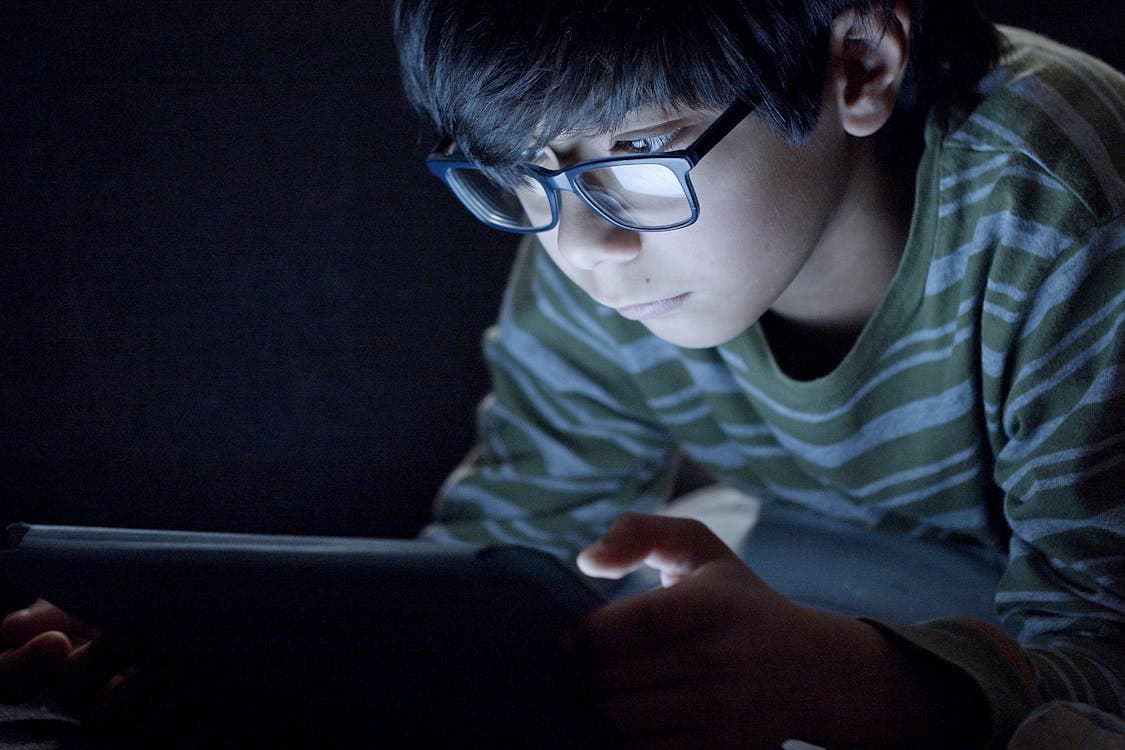
The question: is your child making decisions, or responding to prompts? The difference looks small from across the room and produces very different outcomes. An app where the child chooses what happens next (what to cook, what to build, what combination to try) is using the screen as a tool for their imagination. An app where the child taps the correct answer to get a reward animation is training them to tap for rewards. Both look like engagement. Only one is.
"Doing nothing" in the title is not rhetorical. Unstructured time has real developmental value. A child sitting with a cardboard box, a pile of blocks, or nothing in particular is doing something important. Imaginative play requires the child to generate the story, set the goals, and solve the problems that come up. That is the kind of active, self-directed thinking that transfers to reading comprehension, problem-solving, and emotional regulation years later. An app that displaces that time needs to offer something comparable in return. Most do not come close.
ABCmouse is the clearest case. It spends more on marketing than almost any children's app in the category. The product is a $13-per-month subscription built on gamified curricula, achievement badges, animated rewards, and a ticket economy for completing tasks. Every engagement mechanic is extrinsic. Independent research reviews of ABCmouse have found mixed results on learning outcomes, which makes sense: what the app primarily teaches is how to earn tickets, not how to read. Khan Academy Kids is free, covers the same age range and subject areas, and uses open-ended problem-solving instead of reward loops. The gap in design philosophy is as large as the gap in price.
YouTube Kids deserves its own paragraph because it works differently from a standalone app. The content quality varies enormously. Some channels are excellent. But the platform is built around autoplay and algorithmic recommendations, which means a child who starts on a reasonable video can be watching something much less appropriate within three sessions without anyone noticing. The algorithm optimizes for watch time. It has no developmental editorial judgment. A parent who uses YouTube Kids for occasional specific content is doing something different from a parent who uses it as a default background service, but the interface does not distinguish between those use cases and the algorithm does not either.
Most underperforming apps share the same design pattern. A prompt appears. The child responds. A reward follows. Another prompt appears. The loop is fast enough to hold attention and short enough to prevent boredom. This is the same feedback structure that powers slot machines, social media feeds, and most mobile games built for adults. It is very effective at generating engagement numbers. Nothing gets built in the child. Executive function, the capacity to set a goal, plan steps, resist distraction, and adjust when something does not work, develops through effortful self-directed activity. Responding to prompts is the opposite of that.
The apps that pass our bar share one structural feature: no correct outcome. In Toca Kitchen 2, every ingredient combination is valid and the character reacts without judgment. In Khan Academy Kids, children build and explore rather than answer for rewards. Neither app tells your child they got it right, because right is not the point. Who sets the goal, the child or the app, is the most reliable single predictor of whether a kids' app is worth the screen time.
Before giving a child regular access to any new app, five minutes of observation tells you most of what you need to know. Open it, hand the device over, and watch what happens. Is the child exploring and making choices, or waiting for the next prompt? What do they say while playing? Are they narrating their own story, or going quiet and tapping? A child narrating is a child who is in charge of the session. A child going quiet and following cues is a child being managed by the app. Both look similar from across the room. They are not the same.
The screen time conversation tends to treat 20 minutes of Toca Kitchen the same as 20 minutes of ABCmouse. They are not the same. One is an open-ended sandbox with no correct outcome. The other is a reward-loop system dressed in the language of education. The better apps are not harder to find. They are less well-marketed, because they do not need the word educational to justify themselves. They let the play do the talking.
Our Pick
Toca Kitchen 2 · Top Pick · 3–7 years
No objectives, no scoring, no correct outcomes. Every appliance accepts every ingredient and something happens. The child is making creative decisions the entire time, not responding to prompts.
See full review →