 Bright Shelf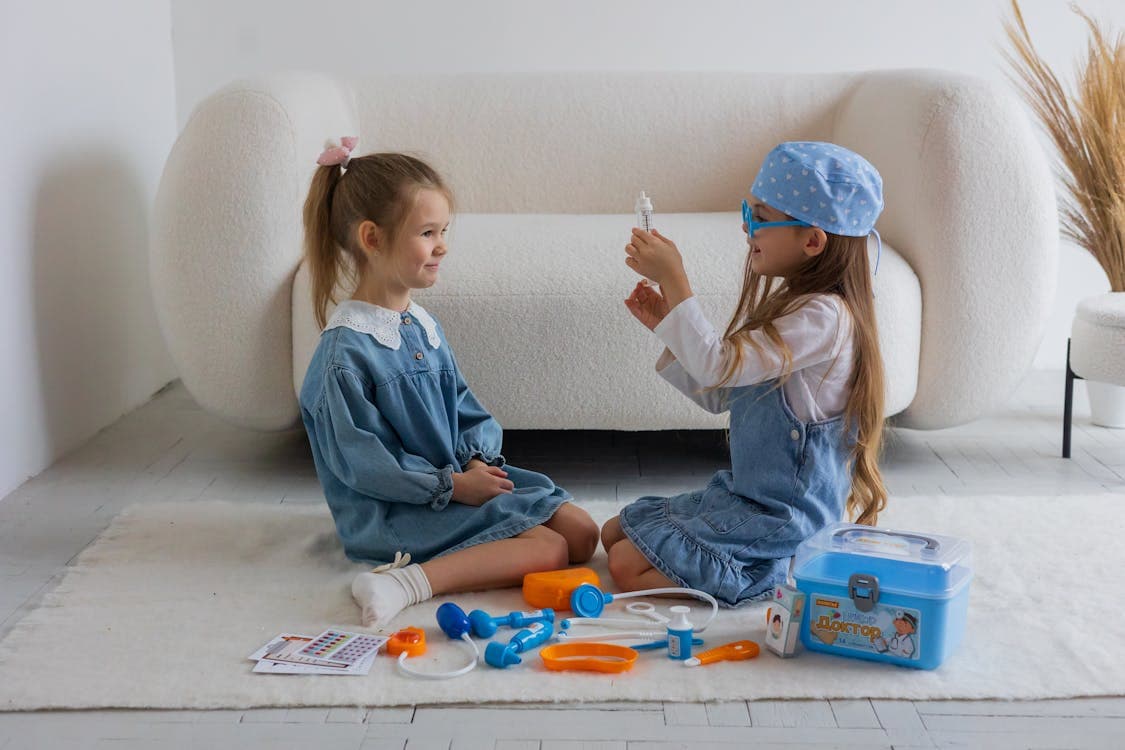
Two-year-olds are not babies who can walk and not preschoolers who can't read. They are in their own distinct developmental phase, and one of the most active periods in early childhood. Pretend play explodes between 2 and 3. This is when a cardboard box becomes a spaceship and a banana becomes a phone. Tantrums peak because emotional vocabulary has not caught up to emotional experience. Language compounds fast: from 50-word vocabularies to full sentences in under 12 months. The products that serve this window are specific. Most popular ones at this age range do not.
The most common buying mistake is buying for what a child was doing six months ago. The toys that worked at 18 months: stacking rings, shape sorters, cause-and-effect push toys. Those are often outgrown by the time parents think to buy more of the same. A 2-year-old does not need more stacking. They need open-ended materials they can assign meaning to: blocks that become buildings, Play-Doh that becomes food, a bin of fabric scraps that becomes a costume for whatever story is running. The pretend play drive is strong and it needs raw material, not a script.
The tantrums deserve their own paragraph because they are the most misread signal at this age. A 2-year-old in a full meltdown is not a behavioral problem. They have just had an experience. Frustration, disappointment, overstimulation. Completely real, no words for any of it yet. The emotional capacity has arrived before the language to manage it. What helps is not correction but narration: "You wanted the blue cup. We only have the green one. That is disappointing." Naming the feeling accurately, without rushing to fix it, is the developmental work of this window. The products that support this are the ones that show emotional scenarios playing out. Not the ones that teach emotion vocabulary as a memorization exercise.
Pretend play at this age needs raw material, not instruction. A 2-year-old given a doctor kit will play doctor for about three minutes, then repurpose the stethoscope as a phone, the bandages as snake food, and the bag as a spaceship. The prescribed role of the toy fights the imagination of the child. The products that survive this window are the ones that offer material rather than storyline: blocks, Play-Doh, a set of small figures with no defined character, a cardboard box. The child assigns the meaning. The toy just has to be there.
The same principle applies to content. A 2-year-old learning about emotions does not need a show that names feelings and explains them. They need to watch a character have a feeling, deal with it, and come out the other side. Daniel Tiger does this in every episode. Where the Wild Things Are does it in ten sentences. Neither one is teaching at the child. They are showing the child something true about their own interior life, which is different and lands deeper.
Books work best at this age when they do the same thing. Where the Wild Things Are is the clearest example in the entire children's canon. Max gets sent to bed without supper, sails to where the wild things are, has a rumpus, gets lonely, and comes home to find his dinner still hot. That is the complete emotional arc of a 2-year-old's day. Sendak did not explain it. He showed it. Your child recognizes themselves in it before they have words for why, and that recognition is doing more developmental work than any book that teaches the word "frustrated" next to a picture of a frowning face.
What does not work at 2 is more specific than people realize. Electronic learning toys with correct-answer reward loops are wrong for this age not because they involve a screen but because they interrupt the pretend play drive with scripted interactions. Any content that explains at the child rather than shows to the child is working against the developmental grain. Workbooks are too early. Phonics drills are too early. Apps built around academic skill-building are too early. The window for this particular intensity of pretend play and imagination will not come back. Spending it on drills is a real trade-off.
The most useful thing any product at this age does is stay out of the way of the child's imagination. A blank wall and a box of crayons. A pile of fabric and a cardboard box. Play-Doh and 40 minutes without a schedule. No battery required, no setup, no instructions. The products worth buying for a 2-year-old are the ones that hand control to the child completely and then disappear. The rest can wait.
Our Pick
Where the Wild Things Are · Top Pick · 2–5 years
The most psychologically precise children's book ever written. Max's journey out and back is the complete emotional arc of a 2-year-old's day. Sendak did not explain it. He showed it. Read it at bedtime. Your child will ask for it twenty nights in a row.
See full review →