 Bright Shelf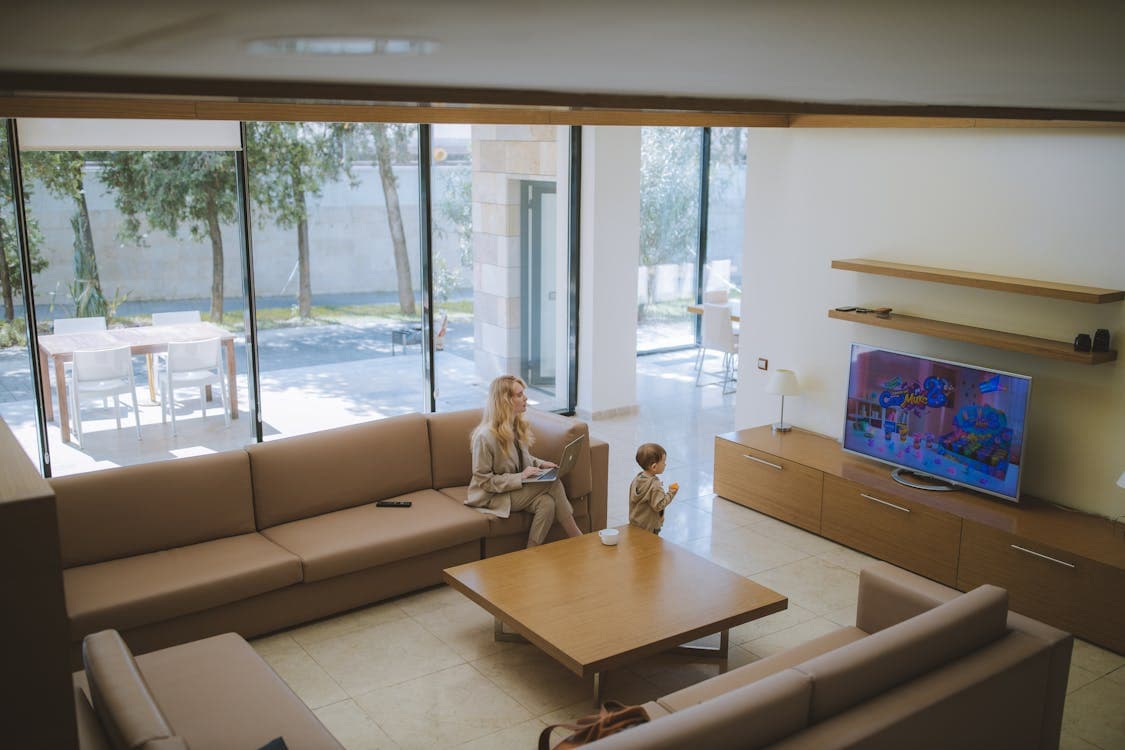
The original rule came out in 1999. The American Academy of Pediatrics recommended no television before age 2, and the recommendation was reasonable given what the research showed at the time: children under 2 were not learning from screens the way they learned from people, and TV in the home correlated with less parent-child conversation. The guideline was precautionary and it made sense. Then it got shared a million times as a rule, divorced from the reasoning behind it, and it has been misapplied ever since.
The AAP updated their position in 2016. The new threshold shifted from 24 months to 18 months, and the framing changed from "no screens" to "no screens except video calls." Video calls were explicitly carved out because the research was clear: a toddler on a video call with a grandparent is getting something categorically different from passive TV: responsive interaction, face recognition practice, a real relationship maintained across distance. The 2016 guidelines also introduced the category of "high-quality programming" for 18-to-24-month-olds, on the condition that a parent co-views and helps the child connect what they see to real life.
By 2023 the guidelines had shifted further still. The AAP moved away from strict time limits toward a framework built around context: what is the content, who is present, and what is the screen replacing? The 1-hour-per-day limit for ages 2 to 5 stayed as a guideline but was framed as a ceiling, not a target. The current position acknowledges that 30 minutes of a slow-paced educational show watched together is a different thing from 30 minutes of background TV, even though the clock reads the same.
"High-quality" is a term the AAP uses without always defining, but they have been specific enough to be useful. PBS Kids programming is the most consistently cited example. Sesame Street is named directly in their guidance. Daniel Tiger's Neighborhood meets every criterion they describe: pacing at natural conversation rhythm, one teachable concept per episode, prosocial behavior modeled by characters, no rapid cuts, content a parent and child can talk about and apply the same day. The clearest negative example is content with scene changes every one to two seconds, which the guidelines flag as inappropriate for under-fives regardless of how the marketing describes it.
Co-viewing changes the outcome of the same content. Research from Hirsh-Pasek and colleagues shows that toddlers learn words from screens when a responsive adult is present to reinforce them in real time, but fail to learn the same words when the content plays without that interaction. This is why the 18-to-24-month guidance specifies co-viewed, not just high-quality. The show is not the complete unit of analysis. The show plus what you do with it is.
The actual mechanism of harm is displacement. Screens cause problems when they replace things children need: sleep, physical play, face-to-face conversation, and reading together. Background TV is the clearest case. It interrupts parent speech and child vocalizations even when nobody is actively watching it, which reduces the quantity and quality of language input during the window when language compounds fastest. The problem is not the screen. It is what the screen pushes out.
The 1-hour recommendation for 2-to-5-year-olds is aspirational and most researchers know it. It is not based on a study that found harm at 61 minutes and none at 59. It is a reasonable ceiling designed for public health messaging, useful as a direction to point but not a threshold to stress about crossing. A family with two working parents and a toddler will not hit it most days. That is fine. The research does not support treating occasional overage as damage.
For most families the practical upshot is this: what your child watches and whether you are present when they watch it matter more than the total minutes. A slow-paced show watched together with a short conversation afterward is not the problem the original guideline was designed to solve. Fast-paced passive content running as a daily default is. The clock is the wrong thing to optimize. The content is the right thing.
Our Pick
Daniel Tiger's Neighborhood · Top Pick · 18–48 months
Meets every criterion in the AAP's high-quality content definition: slow pacing, one teachable concept per episode, prosocial modeling, and a documented transfer effect to real behavior. The coping strategies show up in your child's life outside the TV.
See full review →