 Bright Shelf
🧸 Toys · Ages 1.5-6 years · ~$10
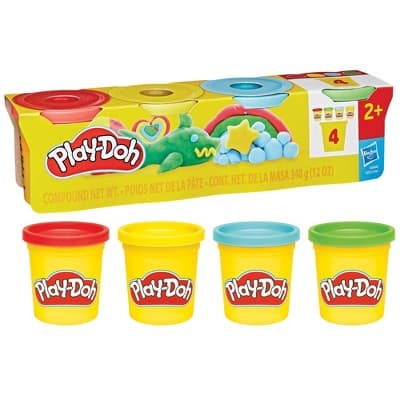
Play-Doh Classic 4-Pack
The take
Give a 3-year-old four tubs and they will invent a bakery, a monster lab, or both in one sitting. Rolling, pinching, and cutting build hand strength all session long, but it feels like pure play. It stays open-ended for years because there is no correct outcome. Caveat: it dries out fast if lids stay off, and bits will end up in the carpet. Accept it early.
Discovery context
Put a ball of each color on a tray and step back. Do not show them how to use it — rolling, flattening, and poking happen naturally within minutes. The first session is usually sensory: squishing, smelling, poking holes. The cooking and food-making phase comes by week two on its own. Introduce the plastic tools slowly; too many at once shifts attention from the material to the accessories.
Why we recommend it
Open-ended, no batteries, no reward loops. Simultaneously develops fine motor precision (rolling thin snakes, cutting with tools), sensory awareness, creative expression, and symbolic play — all documented core skills for 2–5 year developmental windows. Montessori evidence on tactile, child-led, self-correcting play applies directly. 5 years. Completely different experience at 2 (sensory exploration) vs 4 (elaborate food creation) vs 6 (sculpted characters) — genuinely grows with the child. The case for a digital substitute does not exist here.
Parent signal
Quick reactions help us surface what actually sticks in real homes.
Sign in to save your votes.
Parent tips
0 approved tips. New tips are reviewed before publishing.
No approved tips yet. You can submit the first one below.
Sign in to submit a parent tip.